
IDENTITY BEFORE MONEY: A MESSAGE TO CAMEROONIAN ENTREPRENEURS
In the light of the Amba, the covenant must come before commerce. The covenant is all about identity. Identity predates tradition, culture, and business.
AMBA: THE COVENANT OF IDENTITY
Amba = Am + Ba
Am = I AM
Ba = Father
Amba = “I Am Your Father.”
This is the Source. This is the Creator. This is the One who spoke to Moses: “I AM THAT I AM.”
Amba is the name of the Father in the covenant of the Bantu.
From this single root, an entire linguistic family was born.
The Mutations of Amba
- Ambe — The Source (variant)
- Umba — The Navel of the Source
- Umbo — The Navel of the Source
- Ombe — The Source (variant)
- Imba — The House of the Source
- Imbo — The People of the Source
- Kumba — The Drum of the Source
- Kumbo — The Drum of the Source
- Mbo — The Children of the Source
- Mba — The People of the Source
- Ba — The Father
- Bo — The People of the Source
- Mo — The People of the Source
- Boh — The People of the Source
They all point back to the same origin. They are all Amba.
The Five Vowels of Amba
The vowels were stolen from these mutations:
- A — Amba
- E — Ambe
- I — Ambi
- O — Ambo
- U — Ambu
Five sounds. Five vibrations.
ETA MAN: WHO ARE YOU?
What makes the Chinese do business the way they do is who they are: their identity. Elon Musk, Mark Zuckerberg, and Jeff Bezos have built businesses around ambitious visions of the future, including the survival and expansion of human capabilities beyond present limitations. Money is not the only thing driving these ambitions. Identity, vision, and the future of humanity also play important roles.
They live, work, and breathe for the future of humanity. But what about you and me? Do you think we are all humans?
You are not human. You are an ETA Man!
ETA
- E = Earth
- A = Air, the breath of life
- Ta = Father
ETA = The Father breathes into the Earth.
This is the formula of the ETA Man Dem(Etamandem). This is the name of the Source in the covenant.
ETA is the root.
This is how I understand our identity in the covenant: we are connected to the Earth, sustained by the breath of life, and rooted in the Father. Our existence is not merely about accumulating material possessions. It is about understanding who we are, where we come from, and what we are here to preserve.
We have been programmed otherwise!
Our foods are being contaminated through irresponsible agricultural practices. People transform bananas by mixing them with sugar and molasses to produce fake honey. Fruit-ripening agents are being sprayed on food indiscriminately. And in many cases, the reason is fast money!
Dear Cameroonian entrepreneurs, business owners, investors, manufacturers, and organizers of business exhibitions, let us have a conversation that goes beyond profit margins, turnover, investment returns, and the number of products we manufacture.
Let us talk about identity.
Because what is the benefit of building a successful business if the money you make is used to finance the destruction of your own identity?
1. WHAT WILL MONEY MEAN IN 2035?
Elon Musk has repeatedly spoken about a future in which artificial intelligence and robotics could make goods and services so abundant that traditional concepts of employment, scarcity, and money may fundamentally change.
His predictions are not guaranteed outcomes, but they point toward a future we must take seriously. With technologies such as Neuralink exploring connections between the human brain and machines, every African entrepreneur should be asking one fundamental question:
What are you building beyond money?
From cowries to coins, paper money, credit cards, cryptocurrency, and now completely digital forms of money, money has always been a means of exchanging value.
Therefore, value is what matters.
What value would you be producing by 2035 if money became obsolete?
As AI advances and robots increasingly perform tasks that currently require human labor, simply being able to produce something may no longer be enough to guarantee a competitive advantage.
What will distinguish your business? What knowledge will you preserve? What tradition will you protect or restore? What identity will your products represent?
If machines can manufacture goods on an unprecedented scale, then our heritage, indigenous knowledge, traditional originality, relationship with our land, and understanding of ourselves become even more important.
Without identity, we risk losing the meaning of our existence and becoming mere codes that must merge with machines to survive.
Cameroon must prepare for that future.
We cannot spend our entire lives chasing money while neglecting the very things that give our existence meaning.
If all an African person has been able to create from business is money, then they are 500 kilometers away from success.
Money should be a tool for building a people, not a substitute for knowing who those people are.
2. A SUCCESSFUL AFRICAN WHO BUYS INDIAN HAIR TO BURY THEIR NATURAL CROWN IS A FAILURE IN MY EYES
I know this statement will offend some people. But I am questioning a business culture that celebrates local production while its promoters and participants bury their natural hair under Indian, Malaysian, Peruvian, and Brazilian hair.
How do we celebrate African entrepreneurship while treating African features as something that must be concealed, corrected, or replaced?
Your long synthetic eyelashes may have been manufactured in China. Your bone-straight human-hair extensions may have come from India. Your skin-lightening products may have been manufactured elsewhere.
Meanwhile, the money you earn from selling Cameroonian products is being spent on products that can reinforce the belief that you must abandon the very features that identify you as an African.
What exactly are we celebrating?
I am not saying that buying a foreign product automatically makes someone a failure, nor am I suggesting that every person who wears a wig hates their identity. Personal choices are complex.
But we perish because we lack knowledge of identity. We solve economic problems, yet the questions that could reduce our economic burdens remain unanswered.
Look at the people dressed in coats and wearing ties—the very leashes their masters have placed around their necks, like dogs.
Ubuntu: The African Philosophy of Collective Growth, Riches, and Wealth
What is the benefit of producing Cameroonian-made products only to use the money to buy Asian-made beauty products and adopt Western identities?
We cannot preach economic independence while remaining mentally dependent on foreign standards of beauty and fashion.
We cannot talk about building African wealth while teaching the next generation that their natural appearance is something to hide, cover, bleach, or replace.
To say you must become somebody else before you can be beautiful, respectable, or successful is one of the fastest ways to destroy the person you already are.
And once you are destroyed, though successful in the matrix, you become a candidate for the Metaverse. The only way you would be able to maintain success, status, and the image of those wannabe Indian beauty queens would be to merge with the machines.
3. THE AMBA: IDENTITY BEFORE COMMERCE
In the light of the Amba, this is not merely a conversation about hair, eyelashes, or cosmetics. It is a conversation about the covenant between a people, their identity, their land, and the Source.
Before commerce, there is identity.
Before the product, there are the people.
Before the money, there is purpose.
Our melanin is not a business problem that needs to be corrected. Our natural hair is not a defect that requires imported solutions. Our traditions are not obstacles to modernity.
They are part of the foundation upon which we can build businesses that are authentically ours.
Imagine what would happen if Cameroonian entrepreneurs invested as much creativity and capital in understanding, preserving, and developing our natural identity as they invest in selling products to people who have been conditioned to reject it.
Instead of building smart cities, they could build forest-farming villages. Instead of gated communities, they could build bridges that connect farming villages and strengthen relationships between communities.
Imagine natural hair-care industries built around our hair textures, locally cultivated botanical ingredients, indigenous knowledge, and traditional scientific research.
Imagine research and development in African skincare that celebrates melanin rather than treating it as a problem.
Imagine beauty brands whose advertisements feature our natural hair, skin, features, and cultural expressions without suggesting that we must imitate somebody else to be attractive.
That is an industry worth building.
That is wealth with identity.
That is commerce in the light of the covenant.
4. FOR US BY US (FUBUS 2026): AN IMPORTANT INITIATIVE WITH A BIGGER OPPORTUNITY
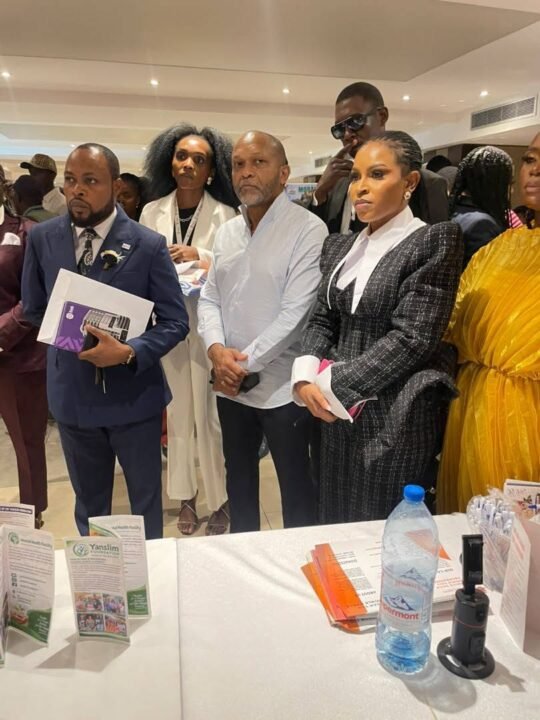
I applaud the For Us By Us (FUBUS 2026) initiative for promoting products made by Cameroonians.
We need more platforms that connect local manufacturers, entrepreneurs, farmers, processors, artisans, and investors. We need to strengthen local supply chains, create jobs, develop our industries, and make Cameroonian products competitive at home and abroad.
However, while applauding this initiative, I equally frown upon the limitations of the thinking that can accompany such exhibitions.
Our ambition must go beyond producing products locally.
We must ask ourselves: What identity are these products promoting, and what kind of consumer are we creating?
It is possible to manufacture a product in Cameroon while promoting a mindset that undermines Cameroonian identity.
It is possible to celebrate local production on a stage while celebrating the rejection of our natural features in our personal and public lives.
It is possible to make money from African consumers while encouraging them to believe that their natural appearance is inferior.
Local production alone does not automatically equal cultural liberation.
For the next editions of FUBUS, I would love to see a stronger focus on the identity of the people for whom these products are made.
Let us not only promote products made by Cameroonians. Let us promote products that understand, respect, and support the people of Cameroon and offer them a completely free life outside the matrix.
Smart cities and smart gated communities may be presented as symbols of progress, but we must also ask what happens when everything smart is controlled by machines and people become dependent on systems they do not control.
I would rather see us build forest-farming villages connected by bridges, roads, communication infrastructure, and sustainable systems of production—communities where people remain connected to the land and possess the knowledge and tools to sustain themselves.
Development must not become another form of confinement.
5. WHAT SHOULD THE NEXT FUBUS LOOK LIKE?
Before displaying the products, let us appreciate the identity that inspires them.
Let us celebrate melanin before displaying skincare products.
Let us celebrate natural hair, Bantu knots, locks, bakala, and our traditional ways of caring for our crowns. Let us reconsider the normalization of wigs, extensions, and synthetic eyelashes as necessities for beauty and success.
Let us celebrate our indigenous food systems, local seeds, traditional recipes, and agricultural knowledge before displaying processed foods.
Let us celebrate our textiles, traditional clothing, craftsmanship, languages, music, and cultural expressions before presenting products to the market.
Let us give researchers, farmers, herbalists, natural hair practitioners, cultural educators, and indigenous knowledge holders a place in the conversation.
Let us challenge the normalization of skin bleaching and refuse to promote products that exploit insecurity about natural skin color.
A platform dedicated to African identity should carefully consider whether products that profit from rejecting that identity belong at the center of its celebration.
This is not about banning everything foreign. It is about developing the confidence to determine our own standards and the wisdom to distinguish between products that serve our people and products that profit from their insecurities.
We can appreciate foreign innovation without abandoning our own heritage.
We can participate in global commerce without surrendering our identity.
We can modernize without erasing ourselves.
6. OUR NATURAL IDENTITY IS ALSO AN ECONOMIC OPPORTUNITY
To the Cameroonian business community, there is an enormous opportunity here.
Our biodiversity, agricultural resources, indigenous knowledge, food traditions, natural hair textures, and cultural heritage can inspire new industries.
We can move beyond exporting raw materials and importing finished products. We can invest in processing, packaging, research, intellectual property, and distribution.
We can build businesses that create jobs while preserving the knowledge and resources that make us unique.
But we must be careful not to replace one form of blind dependence with another. Our natural products should be tested, our claims verified, our production sustainable, and our businesses accountable.
Identity does not excuse poor quality. Heritage does not replace science. Authenticity should inspire excellence.
The goal is not to make inferior products because they are African. The goal is to make excellent products without being ashamed of being African.
That is how identity becomes an economic advantage rather than just a slogan.
Before you ask how much money a product can make, ask what it does to the people who buy it.
Before you invest in a trend, ask whether that trend strengthens or undermines the identity of your community.
Before you celebrate your revenue, examine where that revenue goes and what industries it supports.
Before you build a company, ask yourself what kind of legacy it will leave.
Will your company make Cameroonians more confident in who they are, or will it make them more dependent on foreign validation and eventually surrender them to the machines?
Will your business create knowledge, skills, and productive capacity that remain in Cameroon, or will it simply facilitate the movement of money from our pockets to foreign industries?
Will your success empower the next generation to build upon our heritage, or teach them that success requires abandoning it?
These are not questions against foreign businesses. They are questions about our own responsibility.
The future belongs to those who can combine technology with wisdom, innovation with heritage, and commercial success with a clear sense of purpose and identity.
In the light of the Amba, I believe that we must understand who we are before deciding what we should produce, what we should sell, and what we should buy.
IDENTITY BEFORE MONEY. PEOPLE BEFORE PRODUCTS. PURPOSE BEFORE PROFIT.
I applaud FUBUS 2026. I encourage its organizers and participants to think bigger. Let us build a platform that does not merely celebrate Cameroonian products, but also celebrates the identity, knowledge, and natural heritage that make those products meaningful.
Let us build businesses that do more than enrich their owners.
Let us build businesses that restore dignity, preserve heritage, strengthen communities, and prepare our people for a future in which money alone may no longer define success.
Because when the money is gone, when the machines can produce almost everything, and when material possessions no longer distinguish us, we must still know who we are.
A people who do not know their identity can make money, but they risk spending that money financing their own disappearance.
I am Chef Dawei, the Bantu Priest Chef.
I stand for sustainable farming, food transformation, indigenous knowledge, natural living, and the restoration of our identity.
May our businesses serve the covenant, our people, and the Source.
Agbor Davis Tabot — Chef Dawei
Founder & CEO, Chef Dawei Foods Ltd
Founder, Bantu Rising House
Digital Marketing & Communication Strategist | SEO Specialist | Entrepreneur | Content Creator | Blogger | Product Developer | Website Developer | Community Builder
Website: www.daweifoodsltd.com